
Hard Cider times 3 (log)

  • Thread starter Thread starter Devin Petry-Johnson
  • Start date Start date
  • PATRONS: Did you know we've a chat function for you now? Look to the bottom of the screen, you can chat, set up rooms, talk to each other individually or in groups! Click 'Chat' at the right side of the chat window to open the chat up.
  • Love Gotmead and want to see it grow? Then consider supporting the site and becoming a Patron! If you're logged in, click on your username to the right of the menu to see how as little as $30/year can get you access to the patron areas and the patron Facebook group and to support Gotmead!
  • We now have a Patron-exclusive Facebook group! Patrons my join at The Gotmead Patron Group. You MUST answer the questions, providing your Patron membership, when you request to join so I can verify your Patron membership. If the questions aren't answered, the request will be turned down.
D

Devin Petry-Johnson

Guest
Guest
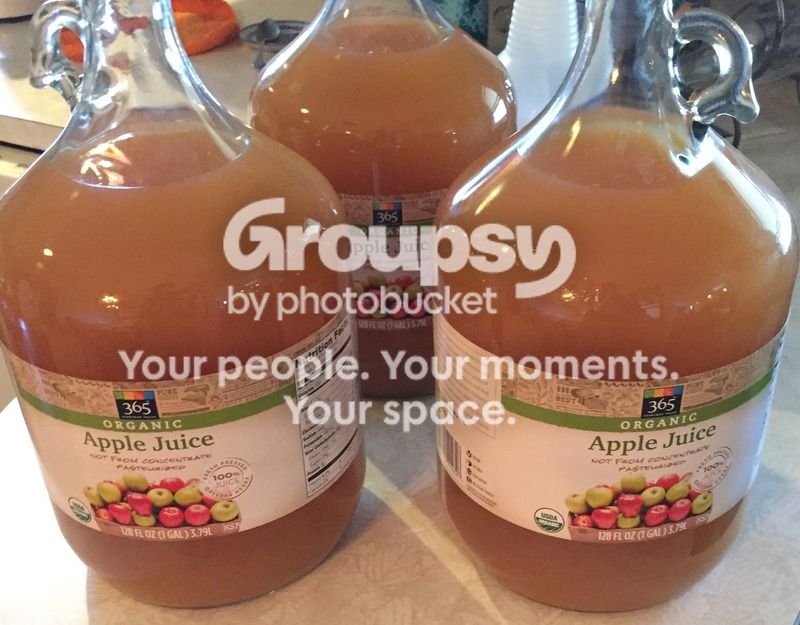
Inspired by Valcarion, I stopped by Whole Foods and got some organic juice in glass jugs. These are a different brand and were $9 each. But empty carboys are $5, so this works out pretty good.

I now have 3 yeasts on hand, so I got 3 Gallons to do a yeast trial/comparison. I used K1-V1116, D-47, and DV-10, each rehydrated with GoFerm.

Recipe:
1 gallon apple juice (minus some for yeast starter)
pectic enzyme
1 cinnamon stick
1 cup brown sugar
1 clove
 
Great experiment. You might want to try one more yeast - 71B which by all accounts has a special affinity for apples and malic acid (the main acid in apples). That said, brewers (of beer) who make cider tend to use SO4 or SO5 yeast. Not sure what they see in that but that's their go to yeast for cider.
 
Thanks. I hear 71B a lot on the boards here but I haven’t gotten to it yet. That will be my next one. I also heard great things about DV-10 and I just got that so I’m pretty excited.
 
Inspired by Valcarion, I stopped by Whole Foods and got some organic juice in glass jugs. These are a different brand and were $9 each. But empty carboys are $5, so this works out pretty good.

I now have 3 yeasts on hand, so I got 3 Gallons to do a yeast trial/comparison. I used K1-V1116, D-47, and DV-10, each rehydrated with GoFerm.

Recipe:
1 gallon apple juice (minus some for yeast starter)
pectic enzyme
1 cinnamon stick
1 cup brown sugar
1 clove


Rad! Looking forward to hearing how it goes. I’ve read that the Whole Foods brand (the stuff you bought) is actually quite good for fermentation so it should go great. Awesome way to stock up on carboys eh!?

I’m using 71b, so we can compare notes when you’ve got yours bottled. Different juice of course but it’s better than nothing.


Sent from my iPhone using Tapatalk
 
3/13 UPDATE:

Fermentation is rocking and rolling on each batch. I had added 1/2 tsp of DAP in each batch at around the 12 hour mark and the 24 hour mark. I think that's too quick for TONSA or your standard SNA. But Valcarion said he's doing ok with no nutrient additions and I've heard that some people just put all the nutrients in at the beginning. So I was being a little lazy.

On each of them, I filled the jug even more than you see in the picture above, so there is very little headroom for foaming. That proved to be a problem because each one has foamed up into the airlock. That's a first for me. I just cleaned them out and added more sanitizer to the airlock. But I haven't been able to degass like I normally do.

K1-V1116: This one started getting some sulfur smells last night. This morning I did a "splash rack" to degass it. I basically poured half of the must into a new carboy, swirled both halves, and poured it all back into the original. It helped a lot, but I think there is still a very slight smell.
D-47: This one is foaming the most. Good smells. I did a similar "splash rack" just to help degass it.
DV-10: This one smells the best. Since I was "racking" the others I did the same thing with this one.

I haven't done a gravity check because I can tell they are moving right along. And I don't plan on adding any more nutrients. So for now my plan is to monitor smells, degass if needed, and wait.
 
3/13 UPDATE:

Fermentation is rocking and rolling on each batch. I had added 1/2 tsp of DAP in each batch at around the 12 hour mark and the 24 hour mark. I think that's too quick for TONSA or your standard SNA. But Valcarion said he's doing ok with no nutrient additions and I've heard that some people just put all the nutrients in at the beginning. So I was being a little lazy.

On each of them, I filled the jug even more than you see in the picture above, so there is very little headroom for foaming. That proved to be a problem because each one has foamed up into the airlock. That's a first for me. I just cleaned them out and added more sanitizer to the airlock. But I haven't been able to degass like I normally do.

K1-V1116: This one started getting some sulfur smells last night. This morning I did a "splash rack" to degass it. I basically poured half of the must into a new carboy, swirled both halves, and poured it all back into the original. It helped a lot, but I think there is still a very slight smell.
D-47: This one is foaming the most. Good smells. I did a similar "splash rack" just to help degass it.
DV-10: This one smells the best. Since I was "racking" the others I did the same thing with this one.

I haven't done a gravity check because I can tell they are moving right along. And I don't plan on adding any more nutrients. So for now my plan is to monitor smells, degass if needed, and wait.

I’ve read that apples are super prone to H2S production, so I try to keep up on degassing extra diligently. However I’ve also talked to people on r/cider who don’t aerate, degas, or add nutrients. They just dry pitch, wait three weeks, and bottle, and they seem to have good results as well. My hypotheses is cider has a decent amount of nutrients to begin with, and fermenting apple smells like sulfur but it ferments vigorously enough to throw off most of it on its own. I’ve read about intentionally starving the yeast of nitrogen in order to end up with a sweeter cider, so based on all of what I’ve read, I’ve come to believe that cider don’t give two shits and will turn out decent despite pretty much anything.

That’s what it seems like to me anyways.


Sent from my iPhone using Tapatalk
 
I think that's too quick for TONSA or your standard SNA.

I don't think you should rely on TOSNA too much in this case. If I'm not mistaken it was created for use in the making of mead, not ciders, and it even states on the TOSNA 2.0 that the amount of nutrient you should add can be cut by the amount of fruit sugars present.

Honestly, adding nutrients was new to me when I started with mead. Before that, nobody ever mentioned anything about it, not when making ciders, beers or wines. I'm 100% sure it couldn't hurt, but IMO you shouldn't rely or worry about it too much.

I think when I'm done with my current batch of mead I'll make two small side-by-side ciders - add nutrients to one, and no nutrients to the other one, and then see the difference between the two at set times. Will make an interesting experiment.
 
To each his own for sure. I would never ferment any mead without nutrients. Why would you? And cider doesn't count. I know they dont feed nutrients. Butcthe gravity is also less than half of a mead.
 
For sure. From listening to your podcasts and reading up a bit about yeast and honey, it's crystal clear that yeast will never perform in a honey must like it can, should or could. When making mead - FEED. Fermaid O is so damn cheap compared to the amount that you're using, I almost can't fathom that you'll want to work without it. Ciders, beers and other fermentables that do contain a lot of nutrients is something completely different and, like you said, doesn't count.

PS: I'm wondering that kind of difference will be noticed when making beer with Fermaid O. Beers are recommended to stand on the rack for a month or so anyway, to "bottle condition", and I can notice an incredible difference between a beer that's 2 weeks old and one from the exact same batch that's stood for 2 months. Maybe I'll test this as well - brew my next batch with nutrients and see if it makes it better, quicker.
 
I think the problem with some apples is that they are really low in nitrogen. Indeed, there is a process of cider making that was once very popular in France and Britain called keeving * where the cider makers worked to remove nitrogen from the must in order to produce a sweeter (hard) cider: keeving would cause the fermentation to stall completely. All that to say, that if the apple juice is low in nitrogen and yeast require nitrogen then that may be the cause of the H2S that cider makers routinely experience. They are stressing their yeast because of the lack of YAN.

*Keeving results in a very clear juice where most of the nutrients are removed by way of the fruit cap sitting atop the fermenter. It is this clear juice which is fermented rather than the near opaque , cloudy juice that comes from pressed apples
 
Last edited:
I’ve read that apples are super prone to H2S production, so I try to keep up on degassing extra diligently. However I’ve also talked to people on r/cider who don’t aerate, degas, or add nutrients. They just dry pitch, wait three weeks, and bottle, and they seem to have good results as well. My hypotheses is cider has a decent amount of nutrients to begin with, and fermenting apple smells like sulfur but it ferments vigorously enough to throw off most of it on its own.

That could be true. One thing is for sure, K1-V1116 smells way worse than D-47 or DV-10. Whatever is happening in there is happening differently. I was going to leave it alone based on everyone's posts but then I had second thoughts because it smelled so bad. I didn't want to risk it. So I did another "splash rack" last night to degass and clear the smell. It worked, but then an hour later the smell was back! My wife convinced me to leave it alone for the rest of the ferment as a test. If it is ruined, we only lose about $5 for the cost of the juice (still get to keep the carboy!) since there is no honey in there.

As a side note: I explained the emergency racking procedure to her (because the smell can become permanent and have a bad taste) and she mockingly called it an Emergency C-Section to which I replied, "more like Emergency Mead-Section" and then we had a good laugh.
 
That could be true. One thing is for sure, K1-V1116 smells way worse than D-47 or DV-10. Whatever is happening in there is happening differently. I was going to leave it alone based on everyone's posts but then I had second thoughts because it smelled so bad. I didn't want to risk it. So I did another "splash rack" last night to degass and clear the smell. It worked, but then an hour later the smell was back! My wife convinced me to leave it alone for the rest of the ferment as a test. If it is ruined, we only lose about $5 for the cost of the juice (still get to keep the carboy!) since there is no honey in there.

As a side note: I explained the emergency racking procedure to her (because the smell can become permanent and have a bad taste) and she mockingly called it an Emergency C-Section to which I replied, "more like Emergency Mead-Section" and then we had a good laugh.

A few people on here have talked about their meads going thru a horribly bad smelling period and then clearing right up and becoming amazing. I agree with your wife, let it be, see what happens! Remember to try and let the yeast clean up their mess.


Sent from my iPhone using Tapatalk
 
I always feed my cysers. There are yeast strains that produces very little H2S.
 
Update:

I racked all three ciders today and here are some tasting notes. I sulfited, sorbated, and added a new cinnamon stick to each one.

K1-V1116: This one had the most cinnamon aroma, which is great considering how bad it smelled during fermentation. This one was the most sour, not very smooth yet.
DV-10: This one cleared the best and had the 2nd best cinnamon aroma. I could also taste the clove.
D-47: This one was the cloudiest and had the most apple aroma and flavor and the cinnamon took a back seat.

It was comforting to see that what I was reading about these yeasts turned out to be true, like how D-47 highlights the fruit and has some citrus notes. I think the taste is pretty similar between the three, with just minor differences. I’m glad I did this little test and I look forward to trying all 3 again in a few months to see where the differences go.

EDIT: I forgot to add that all 3 were at .996 at racking.
 
Last edited:
Update:

I racked all three ciders today and here are some tasting notes. I sulfited, sorbated, and added a new cinnamon stick to each one.

K1-V1116: This one had the most cinnamon aroma, which is great considering how bad it smelled during fermentation. This one was the most sour, not very smooth yet.
DV-10: This one cleared the best and had the 2nd best cinnamon aroma. I could also taste the clove.
D-47: This one was the cloudiest and had the most apple aroma and flavor and the cinnamon took a back seat.

It was comforting to see that what I was reading about these yeasts turned out to be true, like how D-47 highlights the fruit and has some citrus notes. I think the taste is pretty similar between the three, with just minor differences. I’m glad I did this little test and I look forward to trying all 3 again in a few months to see where the differences go.

EDIT: I forgot to add that all 3 were at .996 at racking.

Keep me updated about how it goes! I really wonder what will happen, what the taste will be like. Curious haha.